
Scars
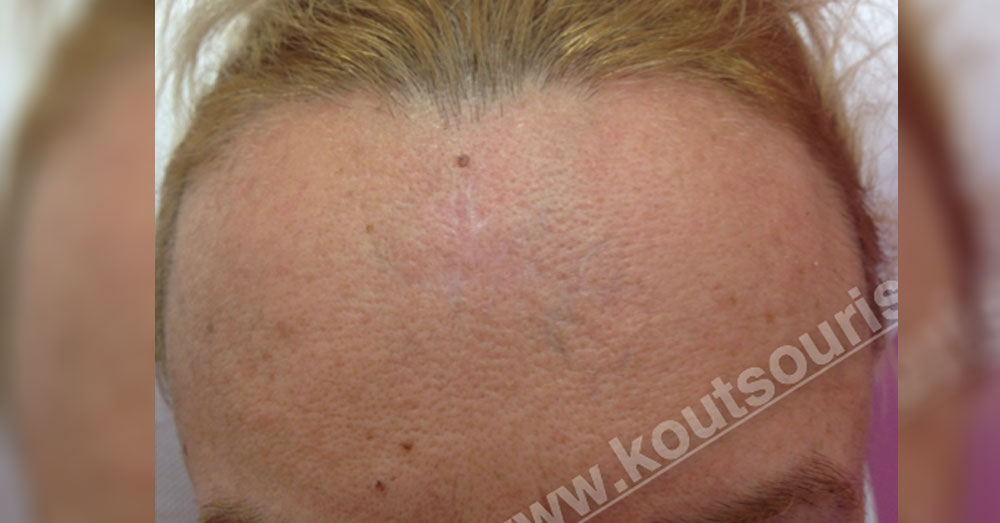
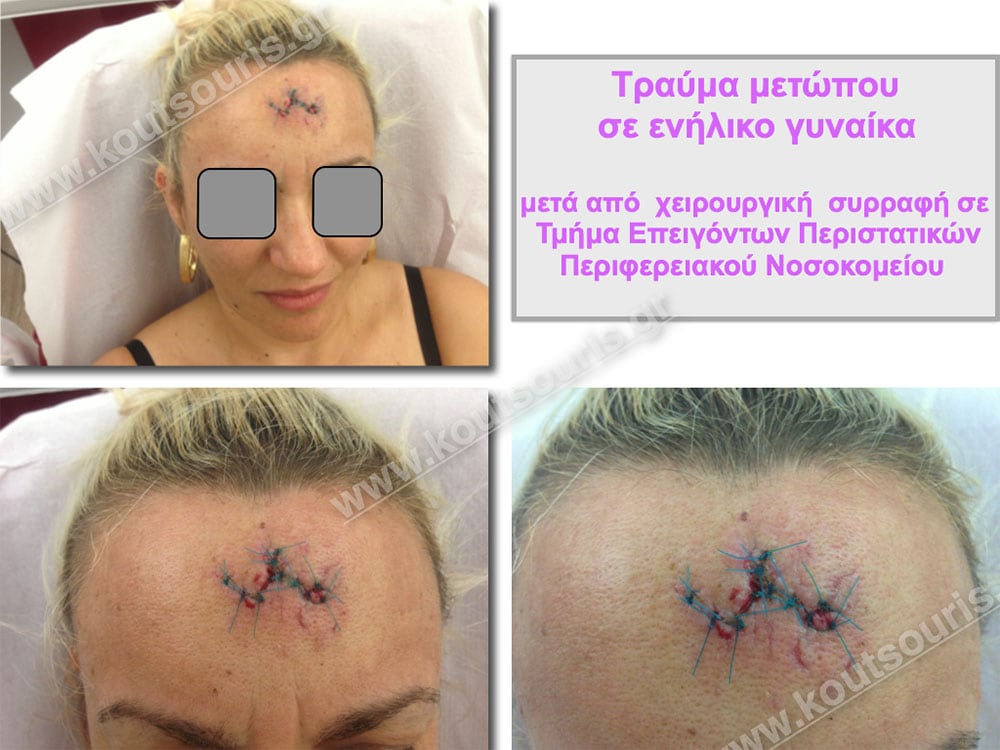
It is true that scars and marks on the skin are a very common and, at the same time, difficult problem that Plastic Surgery is called upon to address today.In most cases, scars are caused by injury due to mechanical or chemical factors or following a burn, which leads to a disruption in the continuity of the skin and the formation of a wound. If the injured tissue is not treated properly and promptly, it may heal poorly, resulting in an unsightly scar or mark remaining on the skin.
In modern Plastic Surgery, we now have the ability to significantly improve or, in some cases, even eliminate an unsightly mark or a deformed scar, regardless of how old it may be.
What are scars?
Scars are essentially marks that remain on the skin after an injury, regardless of its cause. The body attempts to heal the wound by activating the specialized mechanisms it has for this purpose and by maintaining the structural continuity of the skin so that the wound does not remain open. In simpler terms, the body forms new skin to cover the area left exposed due to the injury and the disruption of the skin’s continuity.
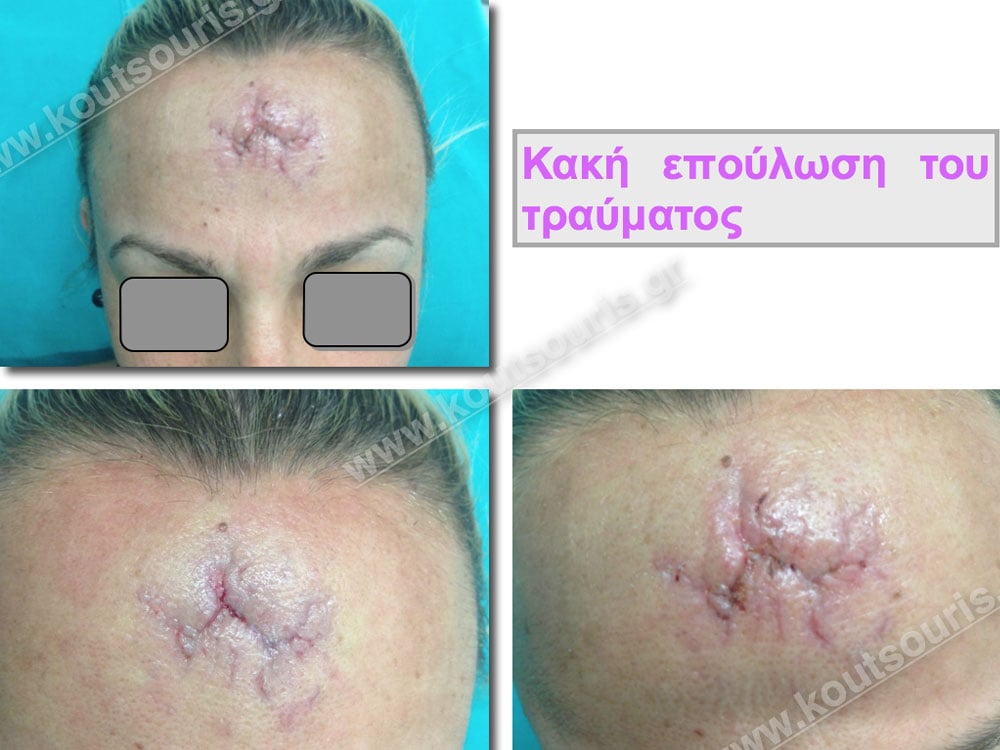
Depending on the wound and the quality of the skin, healing may be complete or incomplete, meaning that the body may be unable to produce healthy skin, resulting in the formation of an aesthetically unsightly scar at that location.
How are scars classified?
Scars are classified as:
- Hypertrophic scars, meaning hard and red scars that protrude above the surrounding skin. They are usually large in size but do not extend beyond the boundaries of the original injury.
- Atrophic scars, meaning scars characterized by thin, atrophic skin at the area where they develop.
- Keloids, meaning hard and red scars that protrude above the surrounding skin. They are often deformed scars that are larger than the original wound.
- Postoperative scars, meaning scars resulting from a skin incision following surgery.
- Post-burn scars, meaning scars caused by a burn.
- Contracture scars, meaning scars that usually occur on areas that bend, such as the elbow or wrist. They may often cause significant contraction to the point of restricting joint movement and are most commonly the result of burns.
- Stretch marks, meaning a type of scar formed due to skin stretching caused by significant tension from sudden and major weight fluctuations or pregnancy.
- Acne scars, which form a special category, as they result from abnormal healing of acne-affected skin. Acne scars are caused by hereditary factors as well as by the failure to treat the condition itself promptly and effectively. Acne marks create serious psychological issues for adolescents and later in life, as they remain with the individual throughout their lifetime.
General Symptoms of Scars
Usually, once scars have healed, they do not present symptoms beyond the aesthetic concern they cause. However, there are cases in which scars may cause pain, itching or even restricted movement, as in the case of contracture scars.
When referring to acne scars, the best prevention is the prompt treatment of acne itself by a specialized dermatologist. Plastic Surgery usually aims to restore the scar after it has already developed.
All other types of scars cannot be prevented in a specific way. For example, postoperative scars are unavoidable after surgery. Regarding the aesthetic result, the location of the procedure, the degree of injury and, of course, the skin type play a major role. Surgeons always aim to “hide” scars resulting from surgery either within natural skin folds or in areas that are not readily visible. However, if the skin is predisposed to scar formation, the scar will inevitably be more pronounced. Age also plays an important role in scar formation, as very young and very elderly individuals generally do not develop very prominent scars.
Treatment Methods for Scars, Acne Scars and Keloids
The main treatments used to correct or improve the quality of a scar are:
- Surgical scar revision
- Fractional Laser
- Dermabrasion
- Diamond Microdermabrasion
- Local pressure on the scar area
- Intralesional Corticosteroid Injection
- Hyaluronic Acid Implants
- Surgical scar revision.
One of the main solutions for treating scars and marks on the body, regardless of their category, is Plastic Surgery.In order to surgically correct a scar, at least eight to ten months, or even longer, must have passed since its formation, so that the scar has reached its final form. We often use techniques that change the direction of the scar, intradermal suturing or transfer of the scar into natural skin folds, resulting in the scar becoming almost imperceptible.
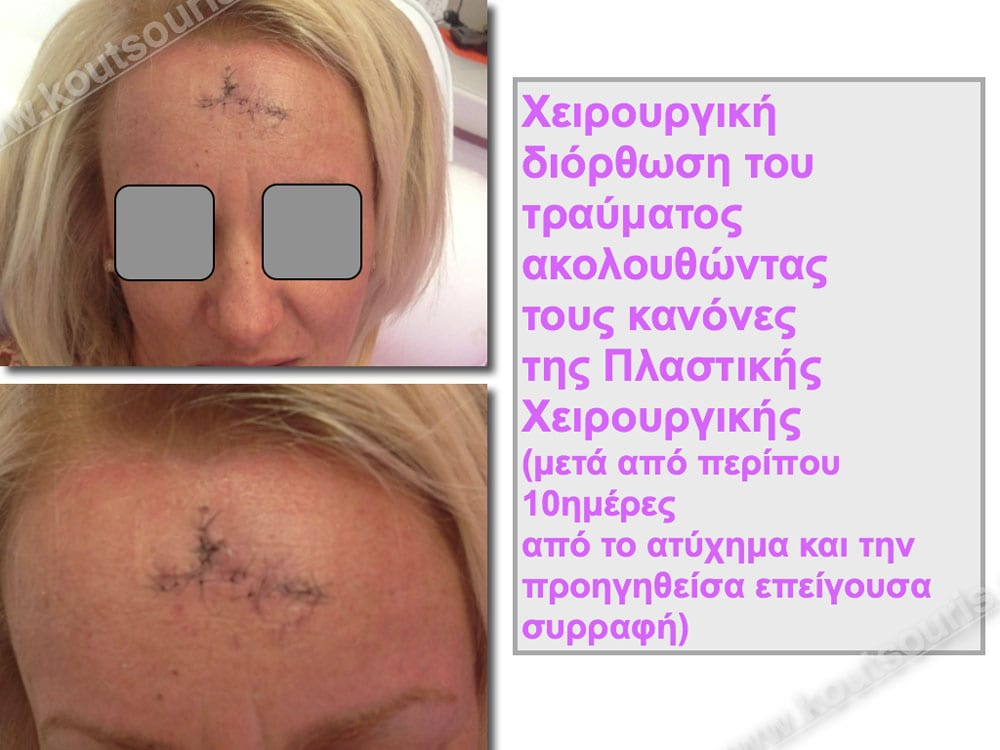
In general, the treatment of scars, particularly keloids, is a long-term and demanding process. The effectiveness of each treatment differs from person to person, and more than one session is often required to achieve the desired result. The shape, depth and age of the scar, as well as the age of the patient, help determine the appropriate treatment or combination of treatments.
In cases of severe acne scarring on the face, a very effective solution is a FACELIFT, since acne-affected skin is characterized by significant laxity. We usually recommend it for individuals between 35 and 45 years of age, where it can produce truly excellent results.
After every surgical procedure, we should:
- avoid smoking for at least 15 days, as nicotine may delay the healing process,
- avoid exposing the incision area to the sun without sun protection for at least 3 months after the procedure,
- moisturize the scar using topical moisturizing creams,
- consult our surgeon periodically regarding the quality of wound healing and, if the scar ultimately becomes hypertrophic or contractile, proceed with the appropriate treatment.
Fractional Laser.
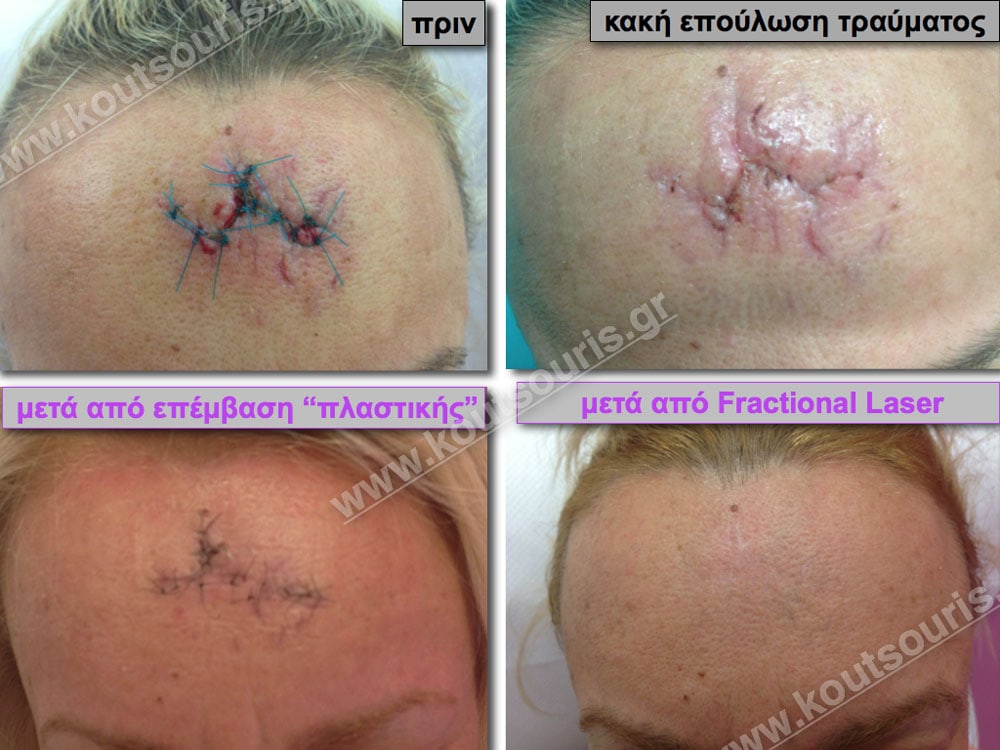
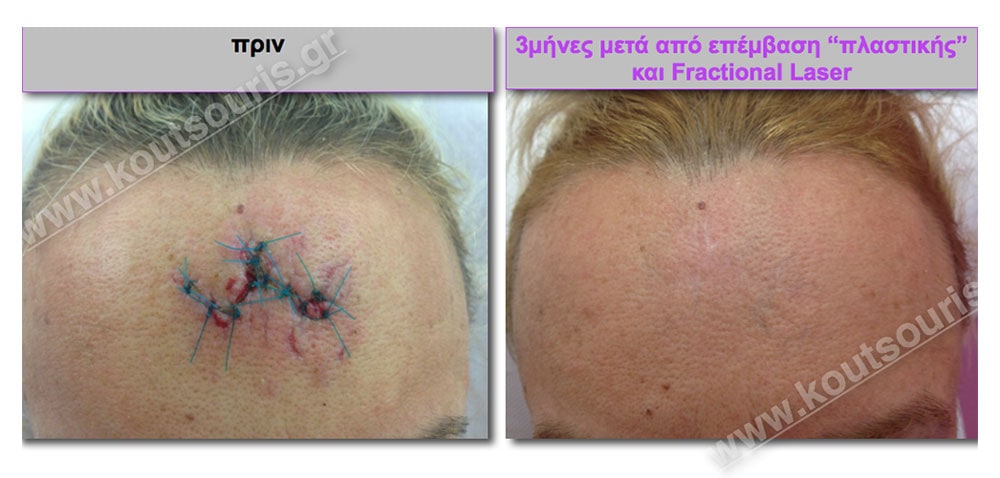
The Erbium Glass Fractional Laser is a latest-generation fractional technology laser. Fractional means that the Laser beam can selectively target the surface of the skin and penetrate to a controlled, desired depth while leaving the adjacent healthy tissues intact. At the same time, the action of the Laser can stimulate regeneration of the epidermis in the affected area. This process visibly improves the texture and color of scars.
The application of Fractional Laser is beneficial for acne scars as well as for other categories of scars. The number of required sessions varies depending on the extent of the lesion and the type of scar.
Dermabrasion.
This is a scar-improvement treatment in which the surface of the epidermis is smoothed using a specialized rotary tool.
It must be performed to a sufficient depth so that the raised area is flattened and the edges of the wound are smoothed. Diamond Microdermabrasion.
This is a non-invasive method that achieves bloodless and painless exfoliation and removal of dead epidermal cells. In this way, we smooth the scar and improve its texture and depth.
A satisfactory scar appearance is achieved after repeated sessions, usually performed monthly. The number of repetitions varies depending on the extent of the lesion, although three to five sessions are usually required. Local pressure on the scar area.
In this case, we refer either to the local application of gel or specialized silicone sheets on the scar area, or to specialized graduated-pressure devices, such as Jobst garments, combined with local bandaging. These treatments relieve itching and the sensation of intense tightness in areas with mild hypertrophic scars and small keloids and help reduce the size of the scars. Intralesional Corticosteroid Injection.
This treatment involves injecting steroids into the scar area, which essentially reduce inflammation. The injection is usually repeated every 30 days and prevents an excessive skin reaction, resulting in control and reduction of the scar’s size. It is primarily indicated for the treatment of hypertrophic scars and keloids.
Hyaluronic Acid Implants.
Liquid Hyaluronic Acid implants are recommended for improving atrophic scars, whether caused by acne or another factor. They are used with particular success for boxcar acne scars, making them appear less pronounced. Repeat treatment is recommended every 6 to 8 months or longer.
Because, in real life, scars are not considered “badges of courage”, modern Plastic Surgery and Aesthetic Medicine have the means to make them a thing of the past.