
Hair Removal for Men
Hair on the ears and cheekbones, thick eyebrows, unsightly hair growth on the shoulders, back or sternum, folliculitis caused by ingrown hairs in the neck area? Strange as it may seem, one of the main issues that concerns modern men today is excessive hair growth on the face or body.
Indeed, what man who suffers from excessive hair growth on the face, back or chest would not want to be permanently free of this appearance?

Traditional hair removal methods such as waxing, shaving, needle electrolysis, etc., prove ineffective when it comes to eliminating the problem and are often accompanied by unwanted side effects, such as folliculitis, burns, pain, etc. The results are short-term, very frequent repetitions are required and, above all, the solution offered is by no means permanent.
Laser Hair Removal
The treatment of unwanted hair growth using LASER technology is the most modern and complete proposal for the definitive solution to the problem.
It is a treatment that offers definitive management of the problem of unwanted hair growth, making use of the possibilities offered by modern technology.
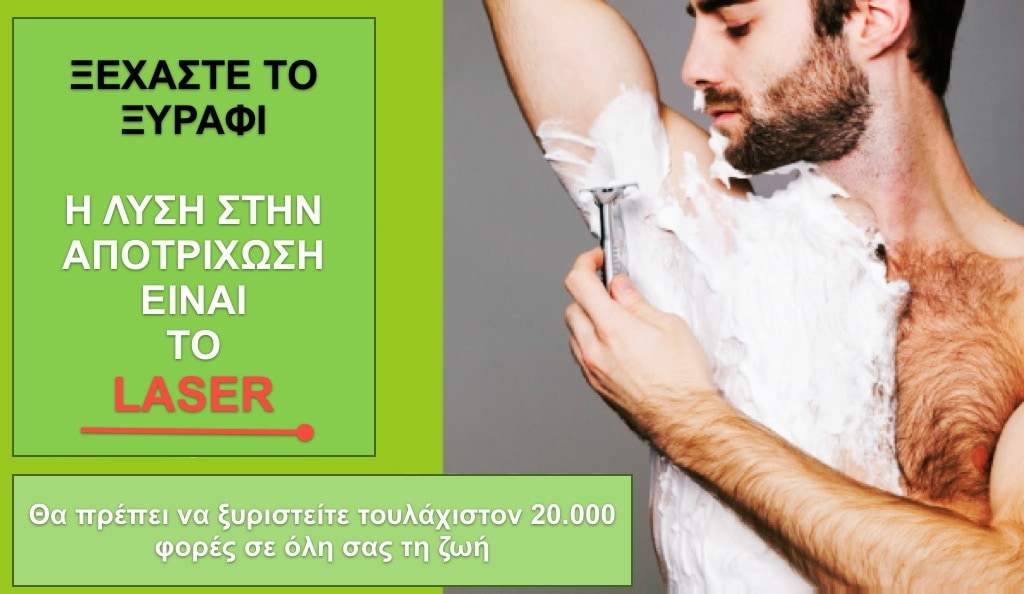
The new LASER systems are truly innovative and offer a unique answer to the problem of permanent reduction of excessive hair growth, with absolute safety and a genuinely low cost compared to other treatments.
What are the most common areas of intense hair growth in men that are treated today with laser hair removal?
Excessive and unwanted hair growth may appear and trouble both younger and older men, on the face as well as on the rest of the body.
Some of the most common areas of the face where unsightly hair appears are:
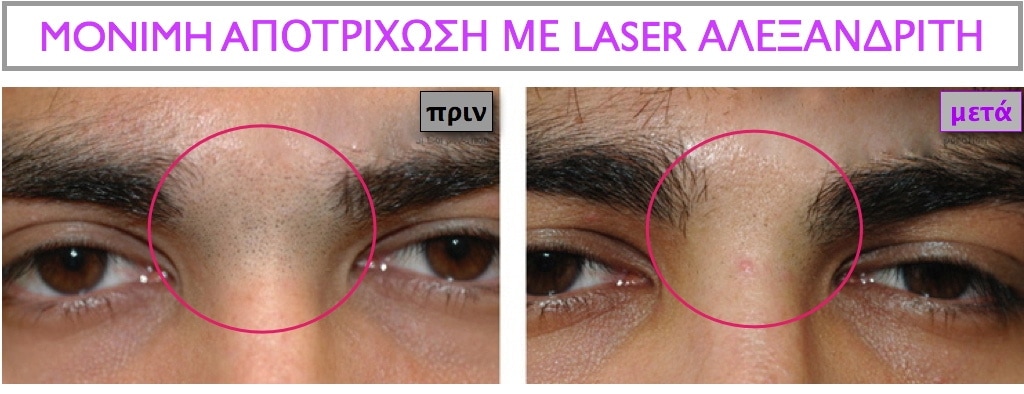
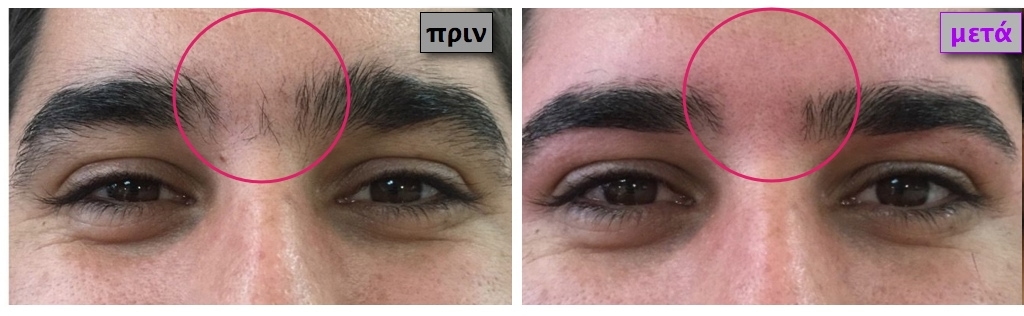
- the glabella, meaning the area between the eyebrows
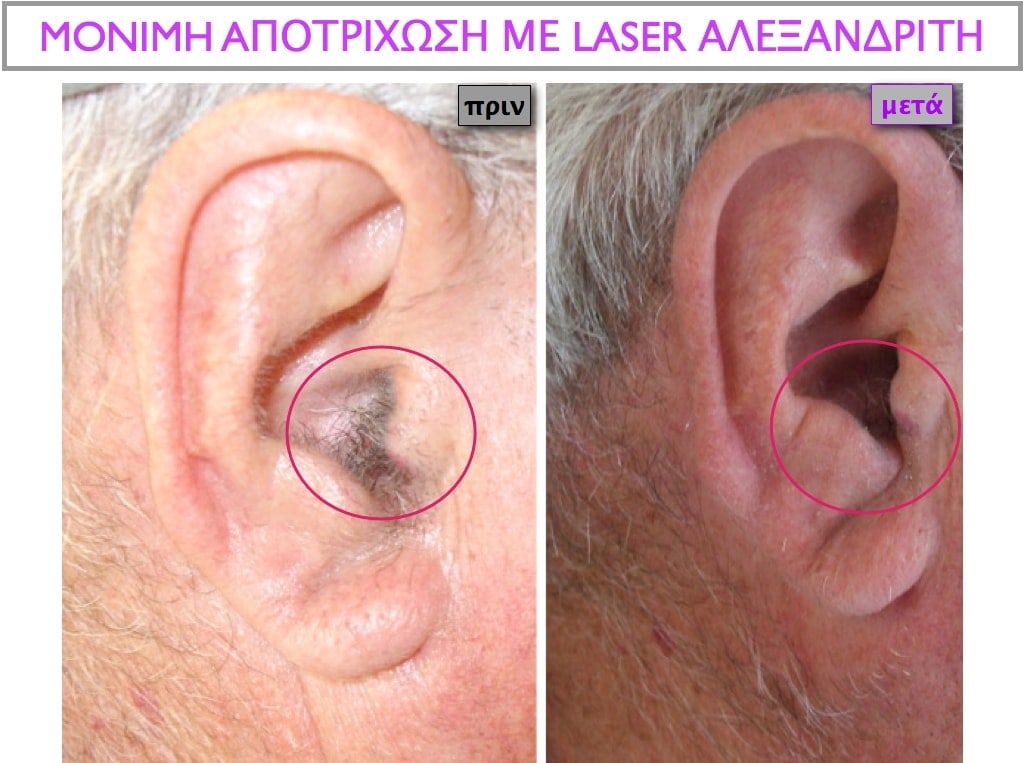
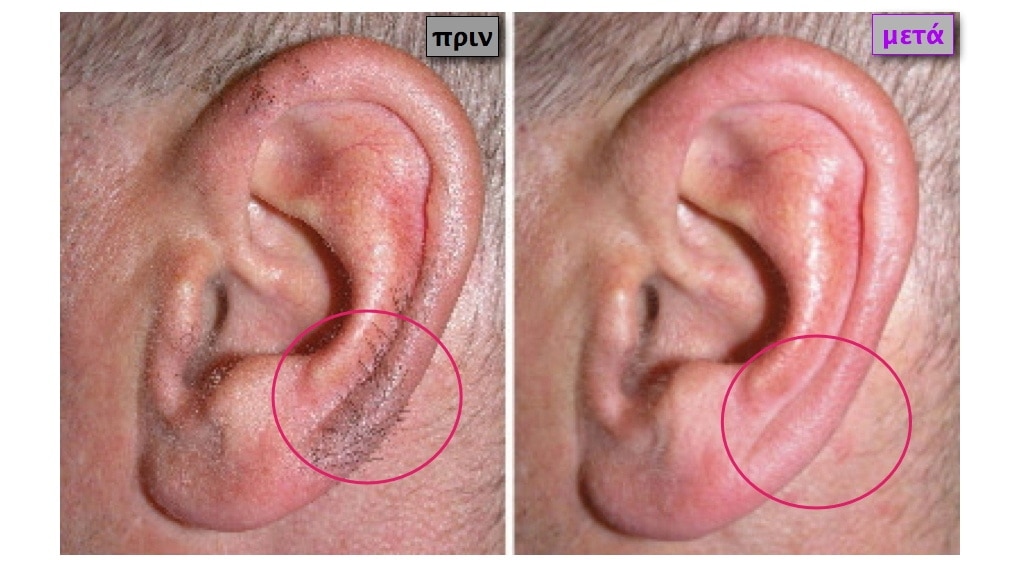
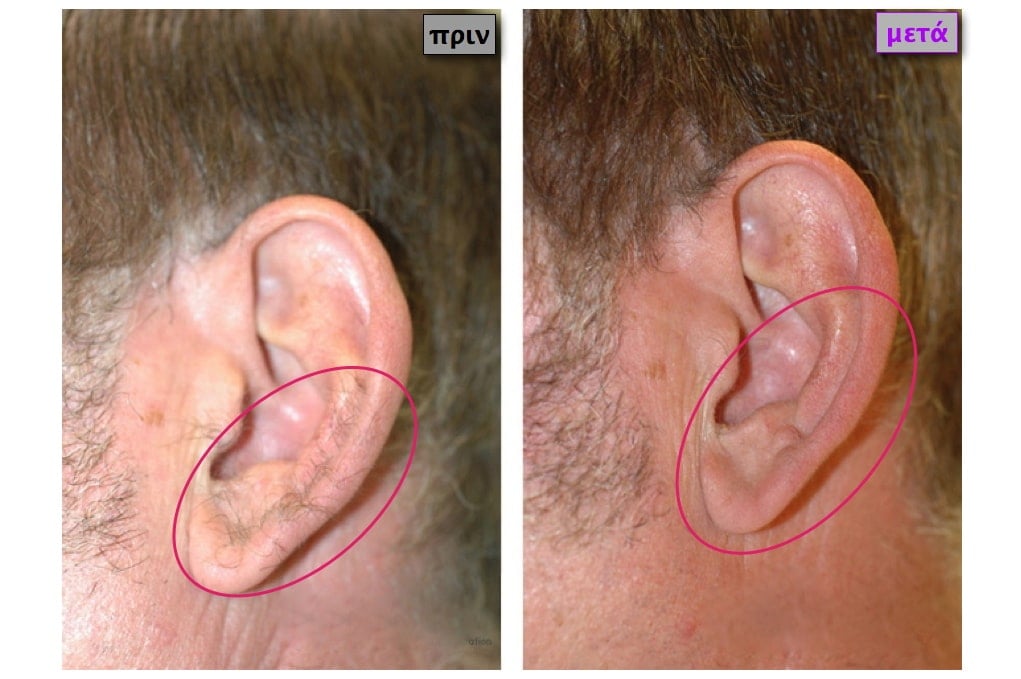
- the ears, especially at older ages
- the cheekbones, most commonly below the eyes
- the neck, where inflammation and folliculitis may develop
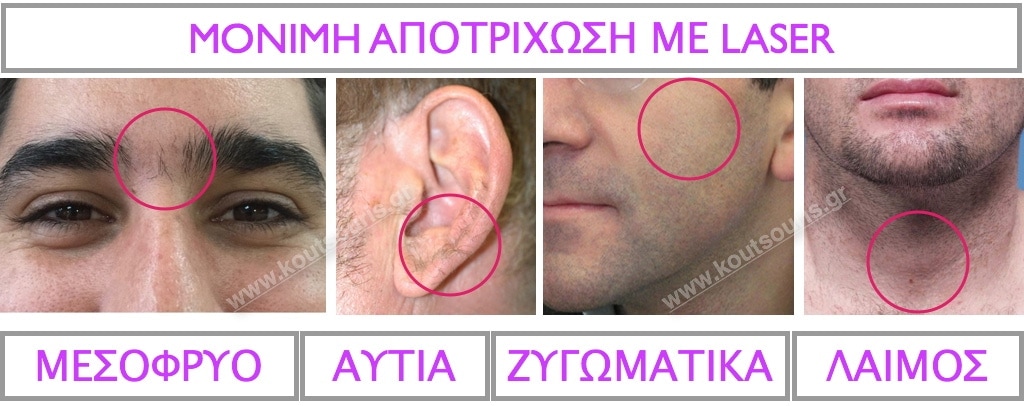
As far as the body is concerned, one of the main problems men face is excessive body hair, meaning areas with hair:
- on the back
- on the ears, especially at older ages
- on the shoulders and nape
- on the chest and abdomen
- on the arms or
- on the legs
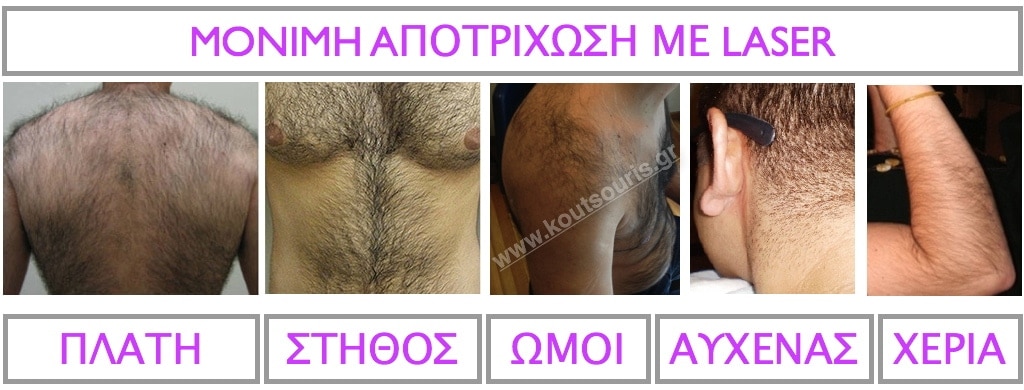
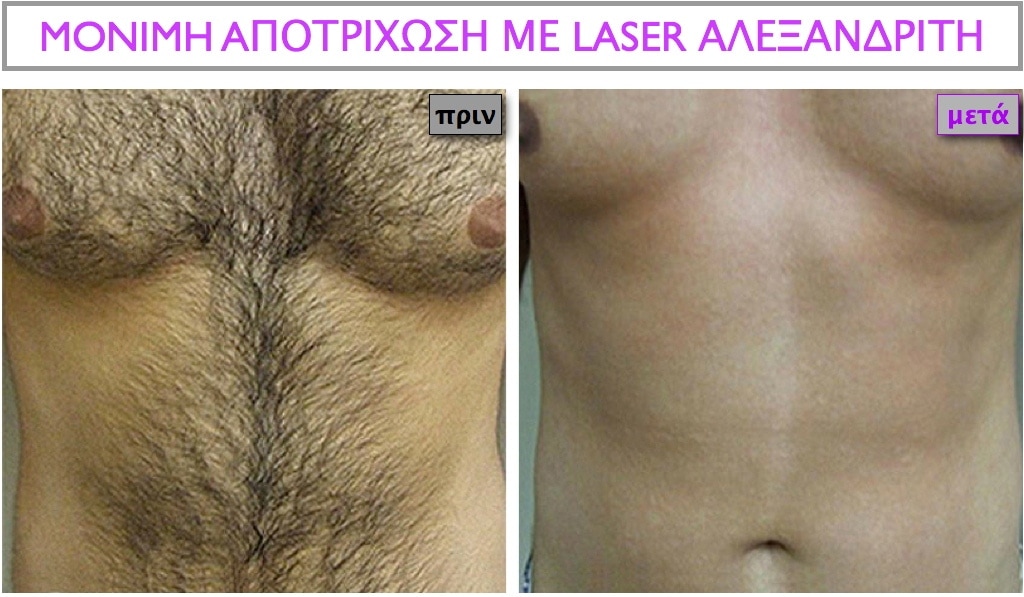
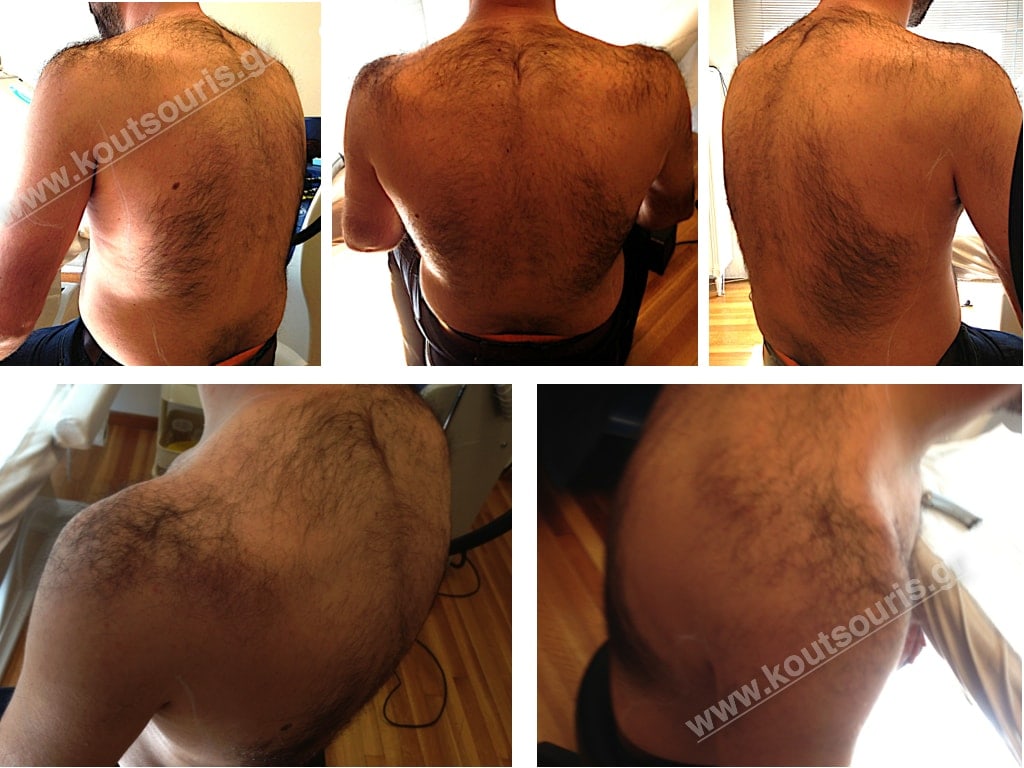
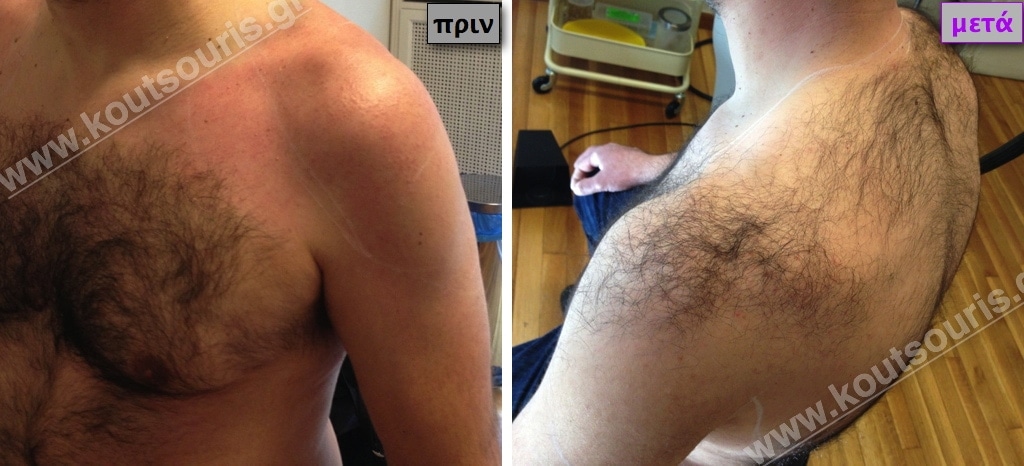
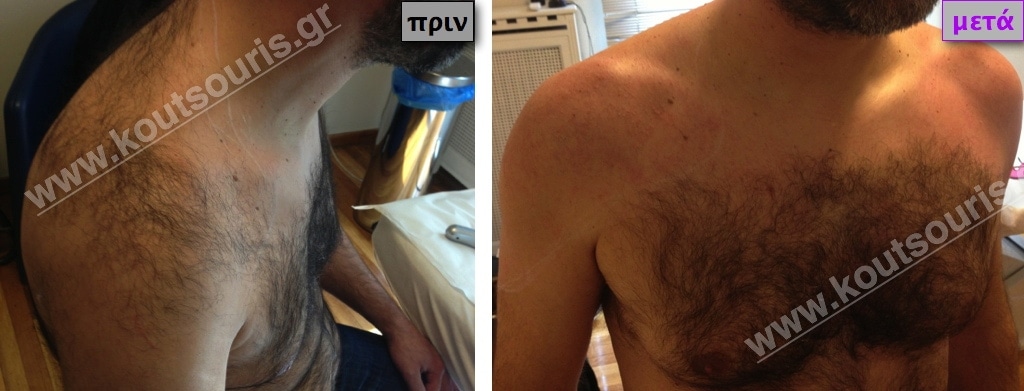
Essentially, this refers to the presence of unwanted hair in visible areas of the torso, which, especially during the summer months, covers the muscular definition of the body and often gives it an unsightly appearance.
Alexandrite LASER hair removal is a unique treatment for removing bothersome hair growth in men, as it can free them from unsightly hair with absolute safety, permanently, quickly and relatively painlessly.
But what exactly is LASER technology?
LASER, Light Amplification by Stimulated Emission of Radiation, essentially means amplified light.
Light that is stable, monochromatic, with a specific wavelength, visible or invisible. This monochromatic light is emitted by a special mechanism located at the heart of every LASER system, which also determines the color of the light produced. When the mechanism is stimulated, it produces a beam of light, which is then emitted in a controlled manner from the device through a very fine optical fiber. Depending on the characteristics of the light, the application of the LASER is determined. In essence, there are many different types of LASER. Each one produces different light from the others and therefore has a different use.
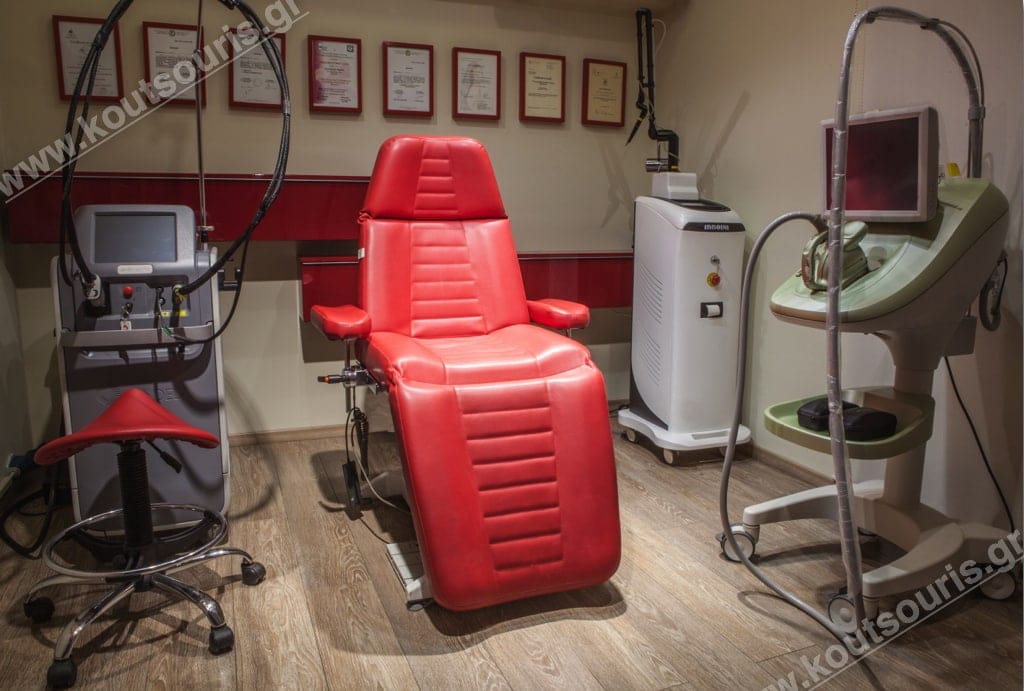
Given that the Alexandrite LASER has received approval from the U.S. Food and Drug Administration, FDA approval, for the permanent reduction of unwanted hair growth, we will attempt to provide a more detailed reference to the treatment of excessive hair growth using this type of LASER.
By what mechanism is hair destroyed using the Alexandrite LASER?
The Alexandrite LASER, through the stimulation of a crystal, produces light that targets the melanin in the cells of the hair follicle. Melanin is a dark pigment produced by the melanocytes of the skin and is responsible for both skin color and hair color.
When LASER light falls on cells that contain melanin, it is fully absorbed by this pigment, resulting in the destruction of the cells through the process of vaporization.
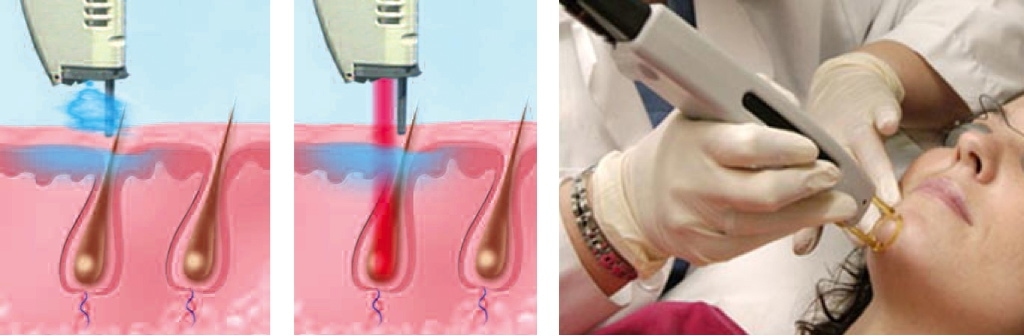
Specifically, when LASER light falls on dark or black hairs, it is absorbed by the melanin in the hair cells, resulting in the destruction of the hair shaft but mainly of the hair follicle, since this is where melanocytes are found in their highest concentration.
The hair follicle is essentially the matrix from which the hair is produced, and therefore the destruction of the hair follicle results in the gradual weakening of hair growth and progressively leads to its definitive elimination. This specific phenomenon is called “Selective Photothermolysis” and forms the basis of LASER hair removal technology.
What should the patient expect during the treatment?
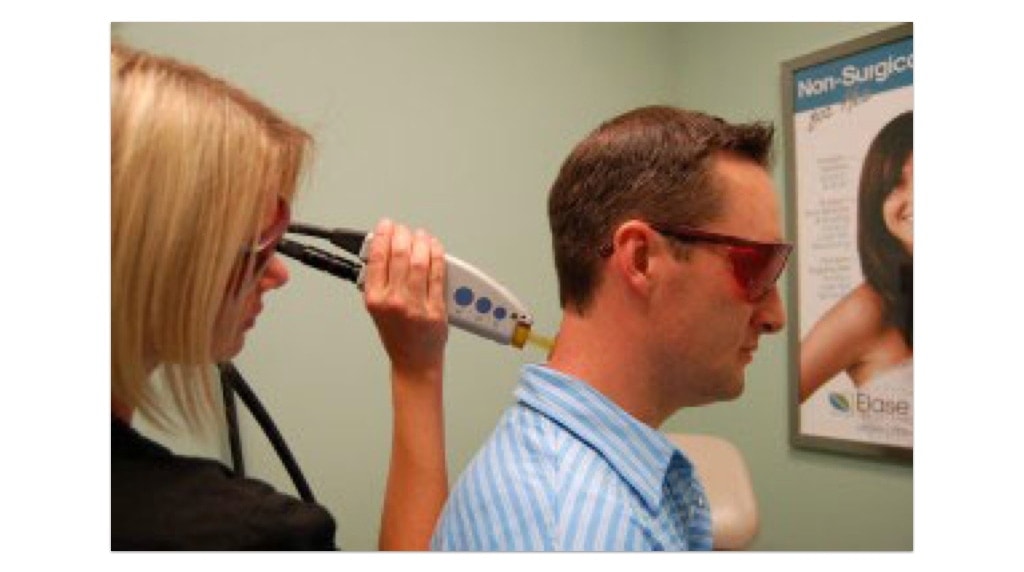
First of all, we always wear safety glasses to protect our eyes from LASER light.
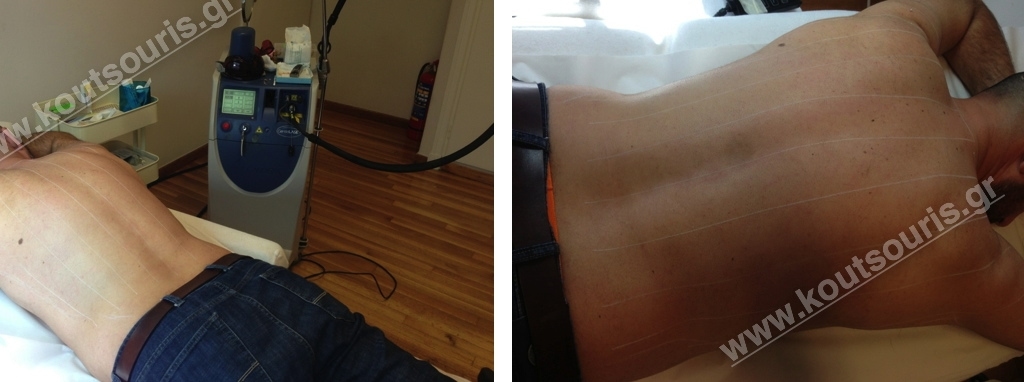
During each application, the doctor guides the light beam to the treatment areas using a small transmission system, a special head, or handpiece, from which the LASER is emitted.
Through this head, the LASER light beam is released over an area of the skin and destroys many hairs at the same time, not each individual hair separately.
Should the area where LASER will be performed be shaved?
In order for the LASER light beam to be effective, it must cause destruction in the bulb, the root of the hair, meaning the part of the hair that is located beneath the epidermis and is not visible.
In essence, the LASER does not “see” and does not need to “see” the visible part of the hair, the part that protrudes above the skin. It acts directly on the hair follicle inside the skin, where the hair is produced, leaving the surface of the skin intact.
What we usually do is simply reduce the length of the hair so that it protrudes 1-2 mm above the skin, rather than shaving the area under treatment. This mainly happens only during the first session, since during the sessions that follow, if they take place in the 4th or at most 5th week, the hairs will not have had time to grow back.
How many sessions will be needed and how long does each session last?
On every body, we distinguish two hair growth zones: hormone-dependent and non-hormone-dependent zones. For example, the face, moustache area and lower back are hormone-dependent zones. The underarms, bikini area, arms, shins, nipples on the chest and eyebrows are non-hormone-dependent zones.
The application of LASER to hormone-dependent areas requires frequent repetitions due to the constant “bombardment” exerted by hormones on the hair follicle.
Specifically, 10 to 16 sessions may be required, with an interval of one month, in order to achieve permanent hair reduction of 70-90% in hormone-dependent zones, while for non-hormone-dependent zones, 6 to 8 sessions are required on a monthly basis for the same hair reduction percentages. The application time ranges from just a few minutes to, at most, one hour, depending on the area.
How often should the LASER session be repeated?
During the life of each hair, we distinguish three phases: anagen, telogen and catagen. During the anagen phase, which lasts approximately 3 to 5 weeks depending on the body area, the hair regenerates and emerges from the hair follicle.
In this phase, the concentration of melanocytes at the base of the hair follicle is at its maximum, so LASER application every 4 to 5 weeks is accompanied by the maximum possible effectiveness. This happens because, due to the high density of melanocytes during the anagen phase, we have maximum absorption of Laser light by the follicle, resulting in the maximum possible destruction of hairs.
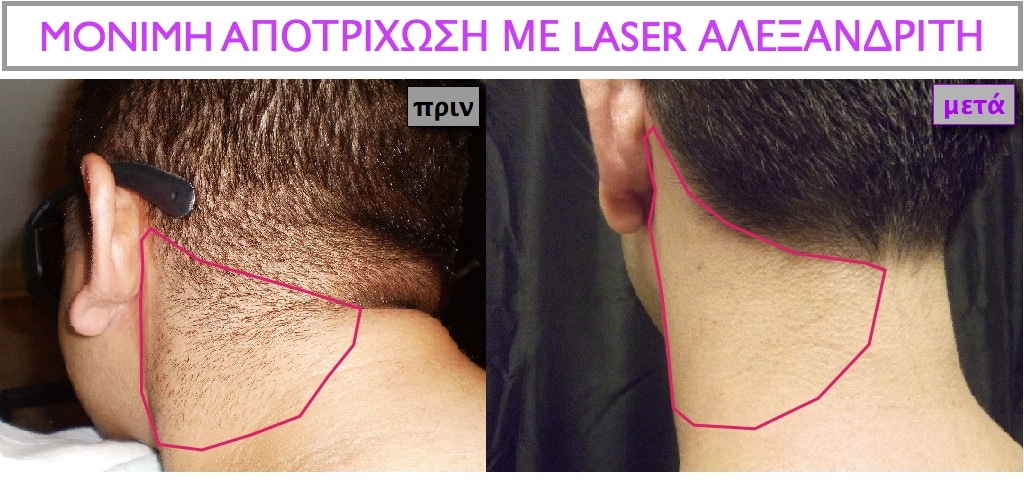
In essence, the treatment should be repeated once a month or, at the latest, approximately every 40 days. In the interval between applications, hairs usually do not have time to develop at all in the area under treatment.
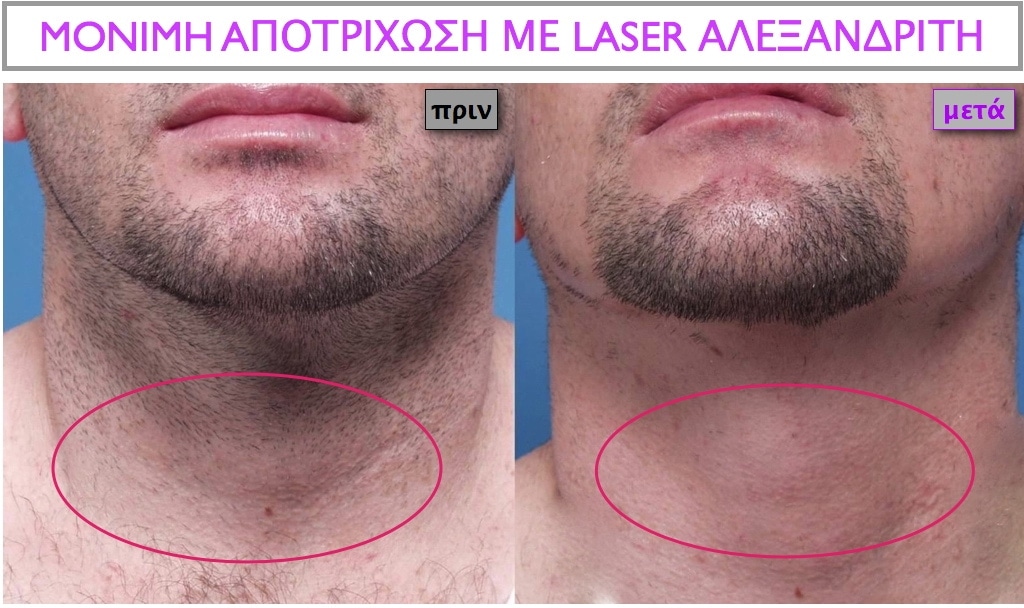
Is LASER hair removal safe? Can there be any side effects afterwards?
LASER hair removal offers a definitive, safe and quick solution. Because it is simply amplified monochromatic light, it can be applied from early adolescence and to all areas of the body, such as the moustache area, chin, cheeks, eyebrows, underarms, bikini area, chest, back, arms, thighs and shins. It is an effective treatment that can literally be applied anywhere unwanted hair growth is found.
Specifically, it is safer to perform LASER on the underarms or genital area than to shave these areas, because with only a few repetitions we are permanently freed from bothersome hair growth.
The penetration depth of the LASER is focused on only a few millimeters, so the underlying lymph nodes are not affected at all.
In conclusion, repeated, “chronic” shaving of the underarm or genital area and the injuries caused in the area are more dangerous for the development of inflammation in the lymph nodes than LASER light, which will provide a permanent and definitive result in approximately six to eight sessions.
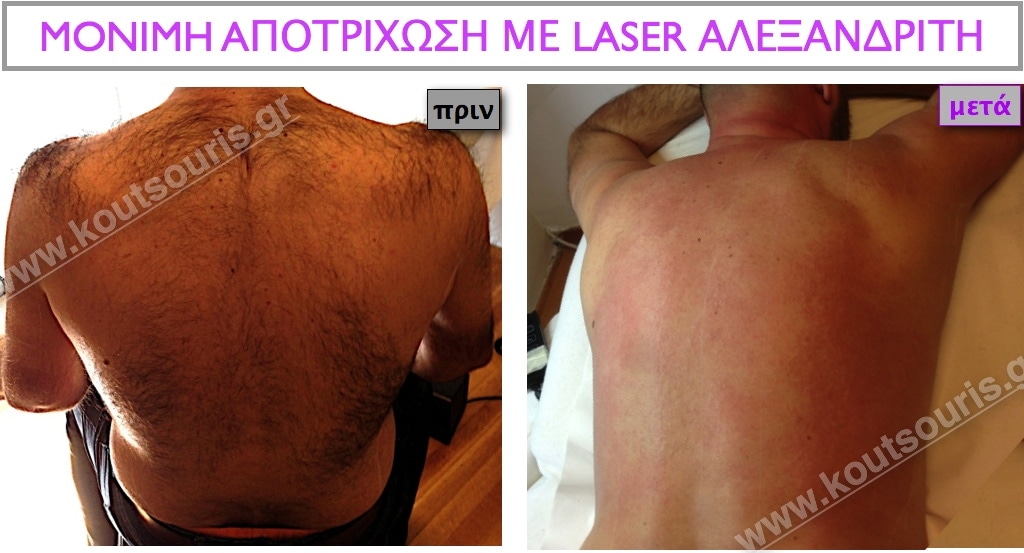
After each LASER application, mild redness, slight itching or very minor swelling may appear in the treated area, but these usually last only a few minutes or, at most, a few hours. Permanent side effects such as hyperpigmentation, discoloration or marks are extremely rare, since most systems have effective cooling mechanisms.
What should the patient be careful about before and after LASER application?
Before LASER treatment, exposure to intense sunlight must absolutely be avoided, as well as various artificial methods of tanning the skin, such as solarium. After LASER treatment, sun exposure must also be prevented as much as possible, and if it is ultimately unavoidable, sunscreen with SPF 30 or higher must be used.
During the first few days immediately after the treatment, we should not rub or wash the treated areas with skin exfoliation products.
Can the Alexandrite LASER be applied to all skin types?
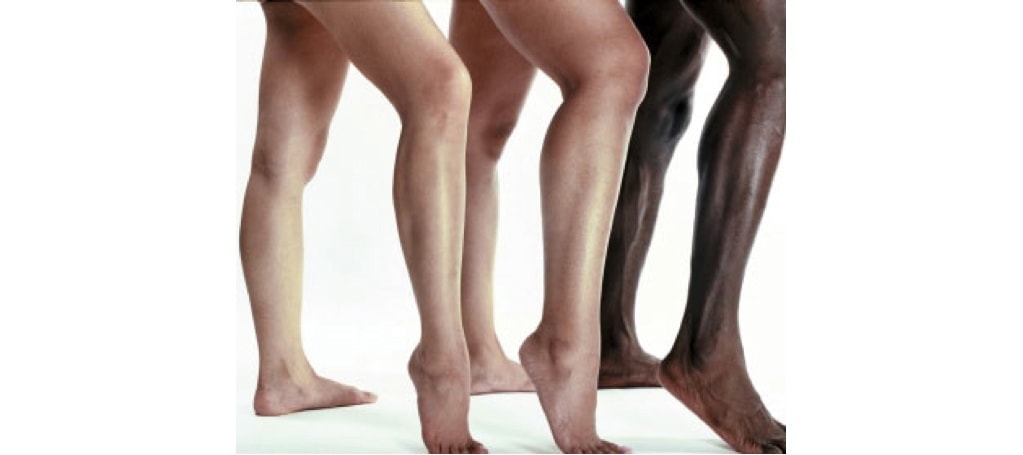
The Alexandrite LASER is an extremely safe option for light-colored skin, since LASER light is not absorbed by surfaces that do not contain melanin. In Mediterranean countries with “wheat-colored” skin, this LASER, with the appropriate selection of treatment parameters, is a very good and effective solution.
The Alexandrite LASER is not a good solution for Black skin and darker skin types in general, nor for recently tanned skin. Black skin or recently tanned skin means a high concentration of melanin, which with LASER application will result in absorption of the light energy by the melanocytes, with the immediate consequence of causing a burn and accompanying postoperative discoloration or hyperpigmentation.
For Black skin or recently tanned skin, the LASER of choice in terms of safety, although not as effective, is the Nd:YAG laser 1064 nm.
Is the Alexandrite LASER effective on white or blonde hairs as well?
This specific type of LASER has the greatest possible effectiveness in treating hair growth that includes black or dark-colored hairs, on any part of the body.
Given that the philosophy of LASER is based on the absorption of light by melanin, if there are white or blonde hairs in an area of the body, meaning hairs without melanin, then the application of the Alexandrite LASER has no therapeutic effect.
Today, there is no type of LASER that specializes exclusively in white or blonde hairs. In these cases, we turn to solutions such as electrolysis.
Could we achieve the same hair removal result if we used photolysis instead of LASER?
Photolysis devices certainly have a place in hair removal treatment, but they are clearly more “primitive” forms of treatment compared to the revolutionary technology of LASERS.
Specifically, photolysis is a form of hair removal whose technology is based on the phenomenon of intense pulsed light. It differs completely from LASER technology because the light in photolysis is polychromatic. Precisely because photolysis devices cannot emit light with the stable and unique color of LASER, they have a less selective action on the hair and therefore much lower effectiveness and, unfortunately, lower safety.
Treatments using photolysis are widely applied in non-medical slimming and aesthetic centers, usually by beauticians and generally non-doctors, since no special operating license is required. The results of photolysis are moderately satisfactory, since areas of unwanted hair growth are partially improved, but usually without providing a definitive and permanent solution.
In contrast to photolysis, only Medical Centers, primarily Plastic Surgery and Dermatology centers, have the right to use LASER, since the application of LASER technology is not such a simple matter and requires specific training and specialization by medical personnel.
The continuous development and upgrading of LASER machines in recent years offers excellent results in the treatment of unwanted hair growth, “which, apart from being particularly safe, tend to be radical and permanent”.
LASER hair removal is a radical treatment. But is it also an expensive treatment? How much does LASER hair removal ultimately cost?
In the past, approximately five to ten years ago, one could claim that “LASER hair removal is a luxury solution”. Fortunately, the same is not true today.
Alexandrite LASER hair removal is an absolutely safe, quick and effective treatment with an extremely affordable cost.
Given that new, faster and more effective LASERS have been developed, and given modern economic conditions, we can say that today the cost of LASER hair removal treatments is particularly low. Apart from the permanence of the results offered by LASER technology, this is an additional reason why LASER hair removal is one of the most popular treatments in Plastic Surgery clinics.
Indicatively, we can list the cost of some Alexandrite LASER hair removal treatments:
- Upper lip – chin – eyebrows: from 20 Euros
- Cheeks / sideburns: from 20 Euros
- Full face – neck: from 40 Euros
- Underarms: from 40 Euros
- Genital area: from 70 – 130 Euros
- Arms: from 80 Euros
- Legs: from 120 Euros
- Ears – glabella: from 20 Euros
- Shoulders: from 70 Euros
- Back, men: from 100 Euros
- Waist – lower back: from 100 Euros
- Chest: from 100 Euros
- Abdomen, men: from 100 Euros
At our Center, each case is individualized. Depending on the skin type, hair structure and the time of year, which is related to sun exposure, Dr. Koutsouris selects and adjusts the treatment parameters, including frequency, pulse duration, energy, cooling intensity, laser beam diameter, etc., so that the application is performed in an absolutely controlled, safe and effective way.
The above prices are purely indicative and are adjusted according to the needs of each individual case.
For further information regarding Hair Removal treatment, contact us directly by phone or schedule an appointment and visit us for a free consultation at one of Dr. Koutsouris’ Plastic Surgery Centers.